
Smart Ways to Rotate Food Storage (So Nothing Goes to Waste)
You’ve probably stood in front of your pantry, staring at a can of beans you bought two years ago, wondering if it’s still safe to eat. Or maybe you’ve tossed perfectly good food simply because it got shoved to the back and forgotten. Here’s the truth: American families throw away roughly 25% of the food and beverages they purchase, costing the typical household between $1,365 and $2,275 every single year.
That’s not just wasteful—it’s a budget leak you can’t afford. The good news? A simple food rotation system can plug that leak, turning your pantry from a graveyard of expired cans into a well-oiled machine that actually saves you money. When you rotate your food properly, you’re not just organizing—you’re protecting your investment and ensuring your emergency stockpile stays fresh and ready when you need it most.
Why Food Rotation Actually Matters for Your Budget
Recent analysis of US food waste shows that household “food surplus”—including outright waste—accounts for about 14% of annual food spending. Even more concerning, the dollar value of that waste has been climbing faster than the actual volume since 2020. Translation: we’re throwing away more expensive food than ever before.
When you build a 3-month stockpile or maintain backup supplies, rotation isn’t optional—it’s essential. Without it, your emergency pantry becomes a collection of expired products that won’t help anyone when an actual emergency hits. A simple rotation habit ensures every item in your stockpile supports your everyday meals instead of gathering dust.
Think of rotation as giving yourself a raise without asking your boss. Every can of soup you use before it expires, every bag of rice that doesn’t go stale—that’s money staying in your pocket instead of landing in the trash.
The Foundation: First In, First Out (FIFO)
The FIFO method is exactly what it sounds like: whatever goes into your pantry first should come out first. This isn’t complicated, but it does require a small shift in how you put groceries away.
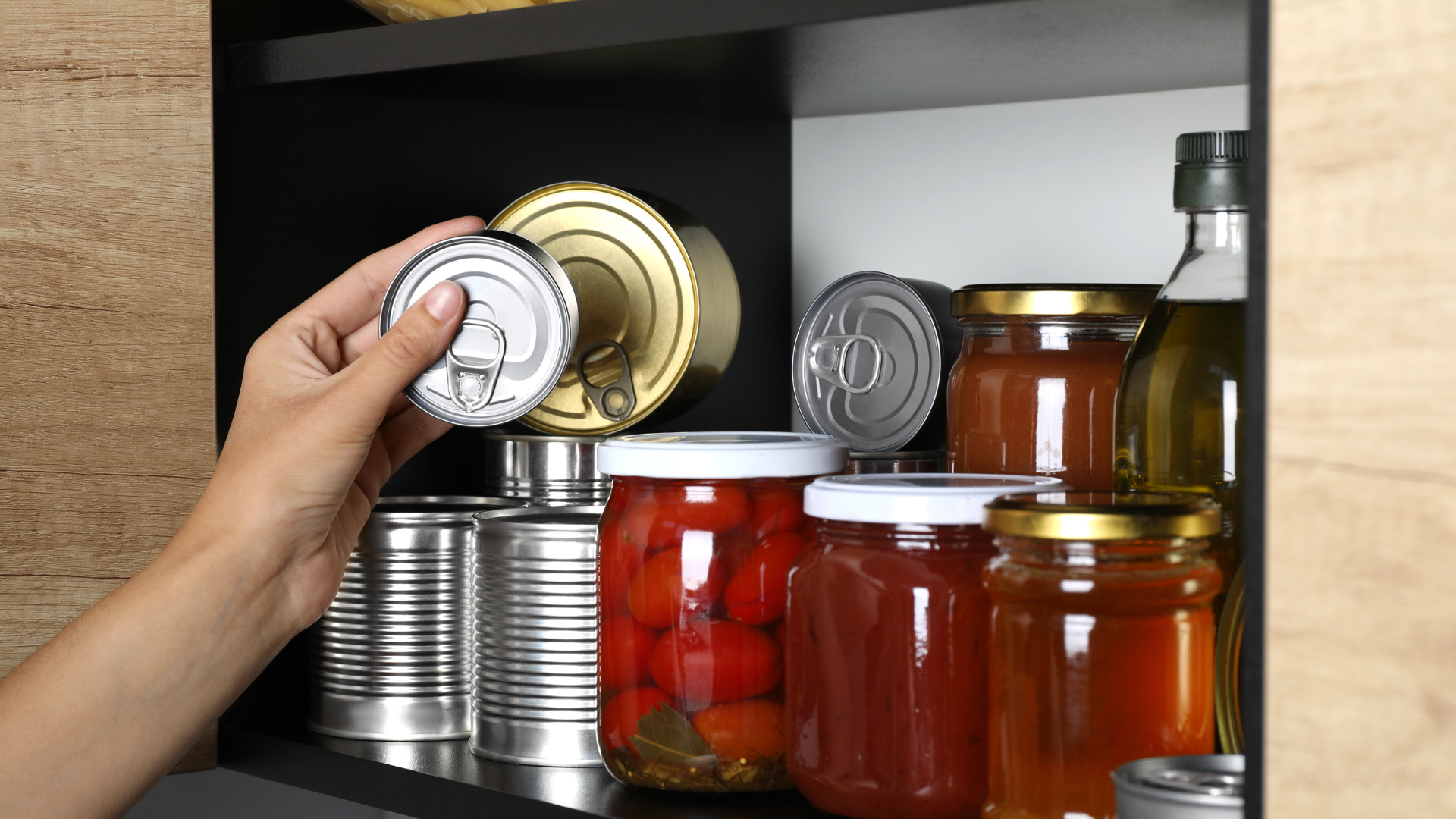
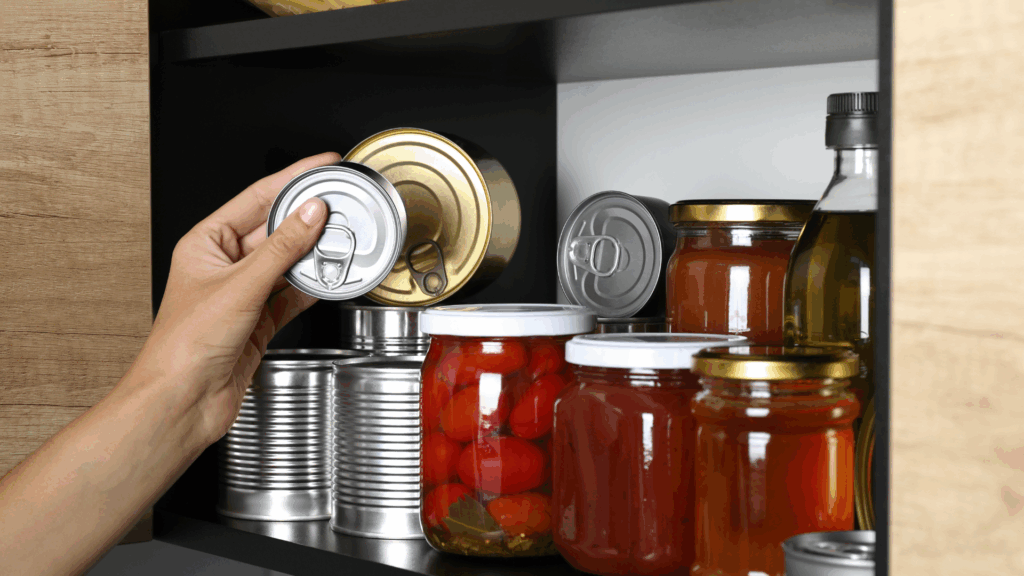
When you get home from the store, resist the urge just to shove new items wherever they fit. Instead, pull older products to the front and slide new purchases behind them. This adds 30 extra seconds per shopping trip, but it enables an automatic rotation system that runs without you having to think about it.
The same principle applies to items stored in bins or containers. If you keep oats, beans, or powdered milk in totes, load new packages at the bottom or back so older items are used first. You’re working with gravity and convenience—the easiest item to grab should always be the one that needs to get used next.
Make It Visible
Label each item with either the purchase date or the “use by” date in large, visible writing. A black marker and two seconds of effort can save you from the guessing game later. When you can see dates at a glance, you know exactly what needs priority.
Clear containers for dry goods like rice, pasta, and flour take this a step further. Not only can you see how much you have left, but you can also spot any quality issues before they become a problem. Label these containers with both the fill date and the date you opened them—some foods change their shelf life once exposed to air.
Build a Living Stockpile
Here’s where most people get stockpiling wrong: they buy foods they never actually eat. A stockpile should be “living,” constantly flowing through your regular meal plans, not sitting static on a shelf.
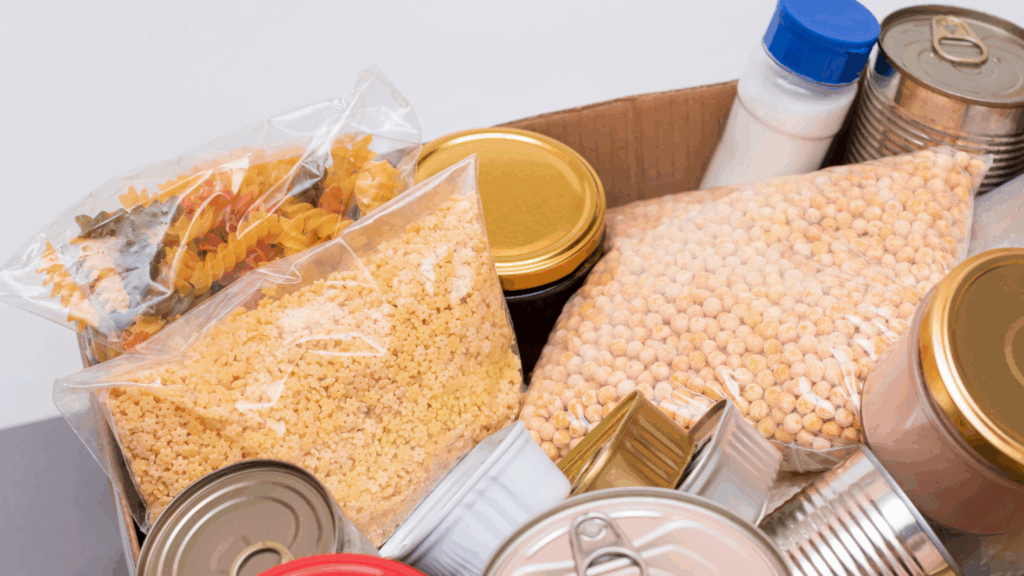
Start with 10-15 pantry staples your family already uses regularly—things like rice, pasta, canned beans, canned tomatoes, chicken broth, and cooking oil. These are the backbone of countless meals, and because you actually use them, rotation happens naturally. Buy extras when they’re on sale, and you’re building both savings and security.
If no one in your household likes canned spinach, don’t stockpile it just because it has a long shelf life. You won’t rotate it, it will expire, and you’ve wasted money and storage space on something that won’t help you anyway.
Create a “Use First” Zone
Dedicate one shelf, bin, or basket as your “use first” spot. Anything approaching its expiration date goes here, front and center, where you can’t ignore it. This makes meal planning easier because you know exactly which ingredients need priority.
Check this zone weekly and plan at least one or two meals based on what’s available. That can of coconut milk that’s been sitting there? Perfect excuse to make curry. Those dried lentils? Time for soup. When you make using these items a game rather than a chore, rotation becomes almost automatic.
Fridge and Freezer Strategies
The refrigerator and freezer need the same FIFO attention as your pantry. New items go to the back, older items move forward. This is especially critical for expensive proteins and dairy products that spoil quickly.
Label all leftovers and batch-cooked meals with both the date and what’s inside. “Soup 2/3” clearly indicates what you’re dealing with and when you made it. Plan to use or freeze refrigerated leftovers within safe time frames—usually three to four days for most cooked foods.

Here’s a money-saving tip that most people miss: commit to cooking or freezing fresh meat within about two days of purchase. Meat is one of your most expensive grocery categories, and letting it spoil is like throwing money away. If you know you won’t get to it in time, pop it in the freezer before it hits that danger zone.
The freezer is also your secret weapon for saving groceries you’ve already purchased. Half-used dairy products, avocados that are ripe now but won’t be eaten until later, bread that’s approaching its expiration date—all of these can be frozen before they go bad. This extends their life and ensures they contribute to future meals rather than becoming waste.
Safety and Storage Guidelines
Storage conditions directly impact how long your food stays fresh and safe. The USDA recommends keeping refrigerated foods at 40°F or below and frozen foods at 0°F or below. These temperatures slow bacterial growth and maintain food quality.
For shelf-stable items—canned goods, boxed meals, dried pasta—store them in a cool, dry place away from direct sunlight and heat sources. Heat accelerates degradation, shortening shelf life even for “non-perishable” foods. Your pantry should ideally be between 50 and 70°F for optimal storage.
Dried goods last significantly longer when stored in airtight containers rather than their original packaging. Those thin paper or plastic bags aren’t designed for long-term storage and are vulnerable to pests. Invest in airtight containers or food-grade buckets, and you’ll extend the shelf life of bulk purchases considerably.

For truly long-term storage—think six months to several years—consider packaging options such as Mylar bags with oxygen absorbers or vacuum-sealed jars. These remove the oxygen that causes spoilage and pest problems. Make sure that whatever method you choose, you’re still storing items in cool, dry conditions.
Systems That Work Without Overwhelming You
The best rotation system is one you’ll actually use. Monthly “pantry checks” take maybe 15 minutes: note what’s getting old, move those items to your use-first zone, and plan a few meals around them for the coming week.
If you preserve food at home or maintain a large collection of canned goods, simple tracking sheets can help. Mark off each jar or can as you use it, so you know when to restock without overbuying. This prevents both waste and the panic of discovering you’re out of something mid-recipe.
Sometimes you’ll have odds and ends that don’t fit neatly into a meal plan—random vegetables, small amounts of grains, bits of this and that. Instead of letting these “stagnant” items sit through multiple inventory cycles, get creative. Throw together a soup, casserole, or stir-fry that uses up those random ingredients. These “everything but the kitchen sink” meals are often the most satisfying.
The Sustainability Connection
While the financial benefits of proper rotation are clear, there’s an environmental angle worth mentioning. Reducing household food waste reduces the embedded resources—water, energy, and transportation—used to produce the food in the first place.

Choosing reusable containers over disposable packaging, composting food scraps that can’t be eaten, and buying more local or seasonal produce when possible all complement good rotation habits. You’re not just organizing more effectively—you’re making choices that align with broader environmental goals while protecting your budget.
Final Thoughts on Food Rotation
Food rotation isn’t about creating some Pinterest-perfect pantry with matching containers and color-coded labels (though if that makes you happy, go for it). It’s about creating simple habits that prevent waste and save money without requiring a management degree.
Start small. Pick one area—maybe just your canned goods or your refrigerator—and implement FIFO there. Once that becomes second nature, expand to another area. Before long, rotation becomes automatic, just another part of how you handle groceries.
The payoff is tangible: fewer emergency grocery runs because you actually have what you need, less money wasted on expired food, and the confidence that your emergency stockpile will actually be useful when you need it. That peace of mind, combined with hundreds or even thousands of dollars staying in your bank account instead of your trash can, makes the few extra minutes per week well worth it.
Your pantry should work for you, not against you. With a simple rotation system in place, it will.