
The $0 Home Reset: How to Make Your House Feel Brand New Without Buying a Thing
You know that feeling when you walk into a friend’s house, and it just feels… fresh? Like they recently redecorated or did something special, but you can’t quite put your finger on what changed?
Here’s what nobody tells you: that feeling rarely comes from buying new stuff. It comes from small intentional shifts—moving furniture, clearing a surface, changing the lighting, or even just opening a window. And every single one of these changes costs exactly zero dollars.
If you’re feeling bored with your home but your budget says “absolutely not” to new decor, this guide is for you. We’re talking about a complete home reset using only what you already own.
Why Your Home Feels Stale (And It’s Not What You Think)
Most of us assume we’re tired of our homes because we need new furniture or updated decor. But here’s the truth: your home probably doesn’t need more stuff. It needs attention.
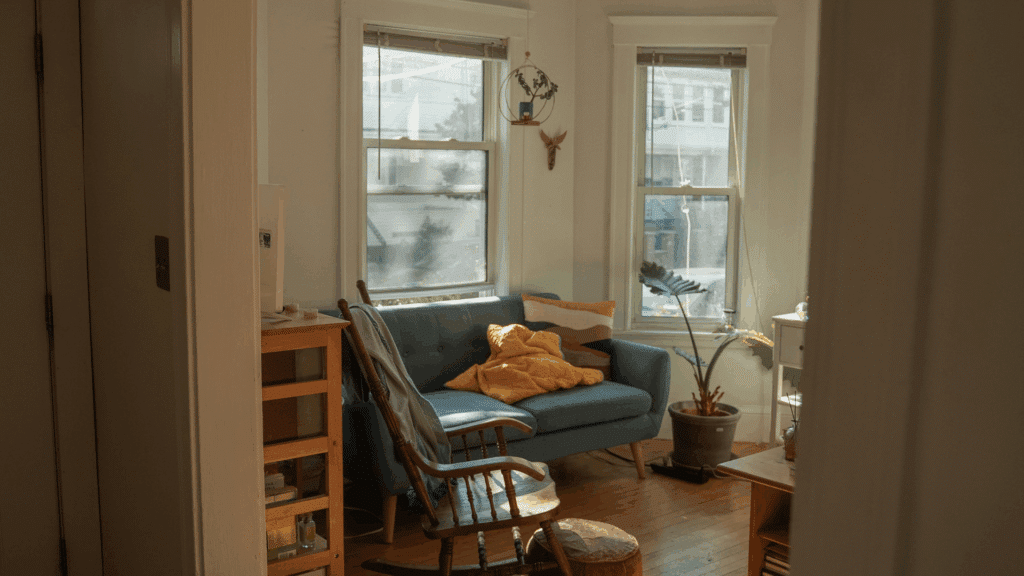
When you live in a space day after day, your brain stops really seeing it. That chair in the corner? Your mind registers it as “chair” and moves on. The pile on the counter? It becomes invisible background noise.
This is called habituation, and it’s why that “just cleaned Airbnb” feeling is so powerful. It’s not about expensive furniture or designer touches. It’s about experiencing your space with fresh eyes and fresh energy.
A home reset is about breaking that habituation without spending money. You’re creating newness through intentional changes that make you actually notice your space again.
The Emotional Payoff of a Physical Reset
Before we get into the how-to, let’s talk about why this matters beyond just aesthetics. Research shows that cluttered, chaotic spaces increase stress hormones and make it harder to focus or relax.
When you reset your home—even one room at a time—you’re permitting yourself to start fresh. It’s a small act of self-respect that says, “I deserve a space that feels good.”
For midlife women juggling work, family, and financial stress, a home that feels calm and intentional isn’t a luxury. It’s a tool for managing everything else. When your space works for you, everything else gets easier.
The real benefits of a home reset:
- Reduced anxiety when you walk through the door
- Better focus and energy in your daily tasks
- A sense of control when other things feel chaotic
- Pride in your space without spending money you don’t have
Think of it as a reset button for your mood, using only what you already have in your house.
Step One: Clear the Canvas (10 Minutes Per Room)
The fastest way to make any room feel new is to clear the excess. Not a full declutter session—just a quick surface sweep that removes the visual noise.
Set a timer for 10 minutes and pick one room. Clear every flat surface: kitchen counters, coffee table, nightstands, and dresser tops. Take everything off, wipe it down, and then—here’s the key—only put back what you actually use or truly love.
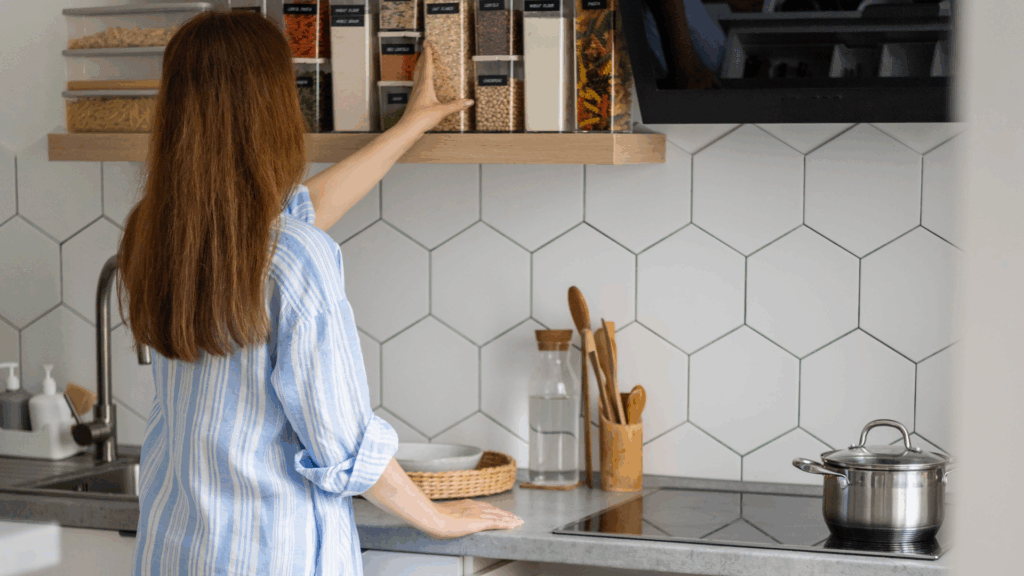
That stack of mail? Deal with it or move it to a designated “action” spot. The random stuff that’s been sitting there for weeks? Find it a home or put it in a donation bag. The goal isn’t perfection; it’s breathing room.
Studies show that the simple act of decluttering, even in small doses, reduces cortisol levels and increases feelings of control. You’re not just cleaning—you’re literally lowering your stress response.
Quick surface resets that make a difference:
- Kitchen counter next to the stove—keep only daily-use items
- Bathroom counter—clear everything except soap and one or two essentials
- Coffee table—one small decorative item max, plus any remotes in a basket
- Bedroom dresser—only a lamp and maybe one personal item
The clearer your surfaces, the more expensive and intentional your home will feel. And it costs nothing but 10 minutes of focused attention.
Step Two: Rearrange What You Already Have
Once your surfaces are clear, it’s time to play interior designer with what you already own. Moving furniture and decor between rooms is one of the most effective zero-cost ways to make your space feel completely different.
Start with the big pieces. Pull your sofa closer to a window to maximize natural light. Angle a chair to create a cozy reading nook. Rotate your rug 90 degrees to change the room’s entire orientation.
Then “shop your house” for smaller pieces. That throw blanket from the bedroom? It might look perfect on the living room couch. Those books stacked on your nightstand? They could become a small decorative moment on a living room shelf.
Even switching out art between rooms can make familiar pieces feel fresh. That print you’ve stopped noticing in the hallway might become interesting again when you move it to the bedroom.
Rearranging ideas that cost nothing:
- Move a chair into a sunny spot near a window
- Pull furniture away from the walls to create better conversation areas
- Use a small table or stool as a plant stand
- Swap cushions and throws between rooms for a new color story
- Rotate rugs between spaces or change their placement entirely
The goal is to create intentional spaces that serve your actual life right now. Function matters more than following decorating “rules.”
Step Three: Use Light to Change the Mood
Lighting might be the most underrated tool for making a home feel different. And changing how you use light costs absolutely nothing if you already own lamps.
Start treating each room differently based on time of day and purpose. Morning in the kitchen? Bright overhead light and open blinds. Evening in the living room? Turn off the harsh overhead and use lamps for softer, warmer light.
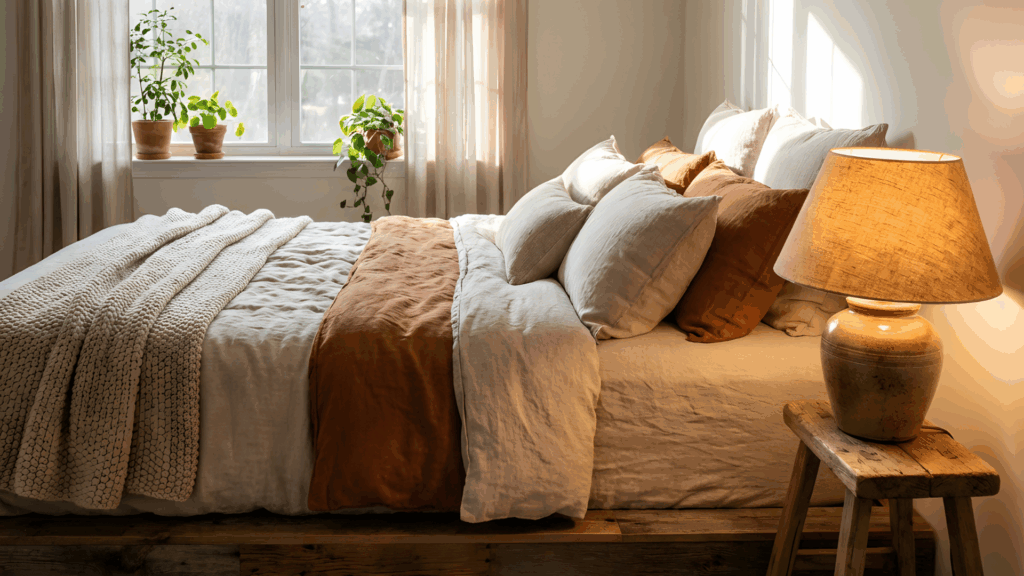
This simple shift—overhead for tasks, lamps for living—completely changes how a room feels. Suddenly, that same couch you’ve had for years feels cozy instead of bland.
Also, clean your windows and open your curtains fully. Natural light makes rooms feel bigger, cleaner, and more expensive without changing a single thing. It’s the easiest mood boost available.
Free lighting upgrades:
- Use lamps instead of overhead lights in the evening
- Open blinds fully instead of halfway to maximize natural light
- Move lamps to different spots to change the room’s focus
- Use cooler, brighter light for morning routines, warmer light for evenings
- Position a mirror across from a window to bounce light around
Play with your existing light sources and notice how different the same room can feel just by changing what’s lit and when.
Step Four: Create Scent Zones with What You Have
Scent is directly connected to the part of your brain that processes emotion and memory. Changing the scent profile of your home is like hitting a reset button on how it feels.
You don’t need to buy new candles or expensive diffusers. You probably already have everything you need. Rotate the candles or essential oils you already own into different rooms based on the mood you want.
Lavender or chamomile in the bedroom for a calming effect. Citrus or mint in the kitchen for energizing mornings. Whatever cozy, vanilla-scented candle you have can move to the living room for evenings.
Don’t have candles? Simmer a pot with orange peels, cinnamon sticks, or whatever spices you have on hand. Or put a few drops of vanilla extract on a cotton pad near a vent. Even opening windows for fresh air can completely reset how your home smells and feels.
Zero-cost scent resets:
- Move existing candles to different rooms to create zones
- Make a stovetop simmer pot with citrus peels and spices
- Use essential oils you already have in different spaces
- Open windows to clear out stale air completely
- Run exhaust fans while cooking to prevent food smells from lingering
Think of scent as the finishing touch that signals to your brain: this space is different now. Pay attention.
Step Five: Style One Shelf or Surface Intentionally
Once you’ve cleared, rearranged, and adjusted light and scent, pick one small spot to style with intention: just one shelf, one mantle, or one small table.
Remove everything from that spot, dust it, and then build a simple vignette with things you already own. A few books stacked horizontally, a plant, a candle, and maybe a framed photo. That’s it.
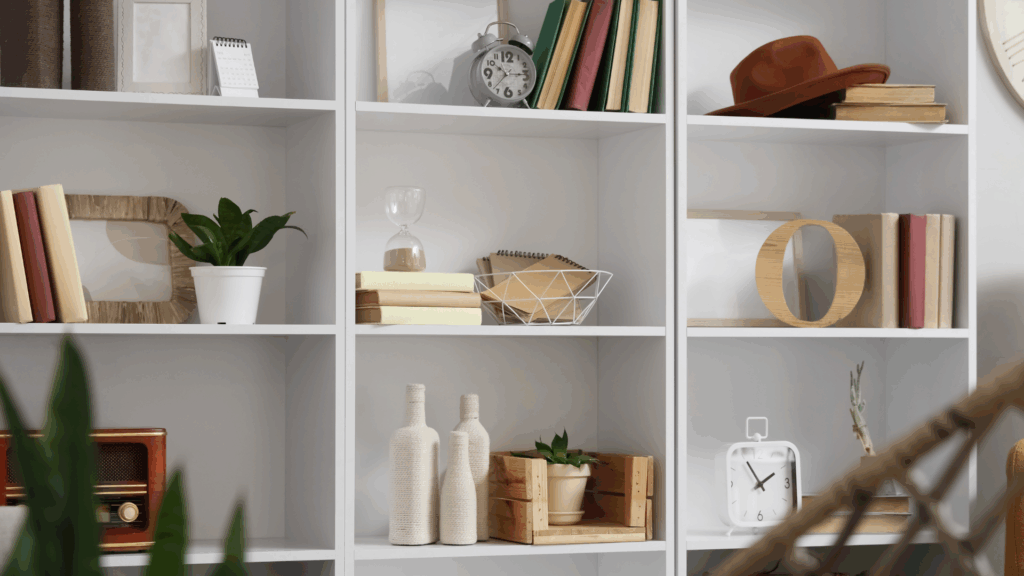
The key is less is more. A few well-placed items always look better than a crowded surface. This one styled spot becomes an anchor point, making the whole room feel more pulled together.
And here’s the thing: once you have one intentionally styled surface, it’s easier to keep other areas clear because you can see the difference it makes. That one small win builds momentum.
Easy styling with things you already have:
- Stack 2-3 books and place a small object on top
- Group candles in varying heights together
- Use a tray to corral smaller items and make them feel cohesive
- Add a small plant or even a branch from your yard in a jar
- Include one personal item, like a photo or meaningful object
Don’t overthink this. You’re not staging for a magazine. You’re creating one spot that feels intentional and calm.
Make It a Ritual, Not a One-Time Thing
Here’s where a home reset becomes genuinely powerful: when you make it a regular practice instead of a one-off project. The emotional and mental benefits compound when you know you can always hit the reset button.
Consider setting aside a “Home Reset Hour” once a week or once a month. Same concept—clear surfaces, rearrange something small, adjust your lighting, and scent. It becomes a ritual that marks fresh starts.
You don’t have to do every room every time. Maybe this week it’s just the living room. Next week, the bedroom. The month after that, you rotate your kitchen setup. Small, sustainable changes that keep your space feeling intentional.
This fits perfectly with frugal living because you’re never spending money to feel better about your home. You’re using attention and intention instead of your credit card.
Building a reset routine:
- Pick a recurring time that works—Sunday afternoon, first Saturday of the month, whatever
- Focus on one or two rooms per session instead of overwhelming yourself
- Create a “reset playlist” that signals it’s time to refresh your space
- Keep it short—30 to 60 minutes max so it feels doable
- Notice how you feel afterward and use that as motivation to keep going
The goal isn’t perfection. It’s creating a sustainable practice that keeps you connected to your space without spending money you don’t have.
When Your Home Reset Saves More Than Money
Here’s what nobody talks about: a home reset isn’t just about making your space look different. It’s about reclaiming agency over your environment when money is tight.
When you can’t afford to redecorate or buy new furniture, it’s easy to feel stuck. Like you’re trapped in a space that doesn’t serve you and there’s nothing you can do about it.
But a $0 home reset proves that’s not true. You can create change. You can make your space feel new. You can fall back in love with what you already have.
That mindset shift—from feeling stuck to feeling empowered—is worth more than any new throw pillow or trendy piece of wall art. It’s proof that you can improve your life without spending money, and that lesson applies to so much more than home decor.
What you gain beyond a refreshed space:
- Confidence that you can create change with what you have
- Freedom from the belief that better always costs money
- A tool for managing stress that’s always available
- Satisfaction from using creativity instead of a credit card
- Energy that would’ve gone to shopping redirected to more meaningful things
Your home is supposed to support your life, not stress you out or drain your bank account. A regular reset practice ensures it does exactly that.
Start With One Room Today
Feeling inspired but not sure where to begin? Don’t try to reset your entire house this weekend. That’s overwhelming, and overwhelm leads to doing nothing.
Instead, pick the one room where you spend the most time or the one that causes you the most stress. For most people, that’s either the living room or the bedroom.
Set a timer for 30 minutes. Clear the surfaces, move one piece of furniture, adjust your lighting, and add a scent element. That’s it. See how it feels.
If you love the result, great. Let that motivate you to tackle another room next week. If it doesn’t feel quite right, adjust one thing and try again. The beauty of a $0 reset is you can experiment without any financial risk.
Your home doesn’t need to be perfect. It just needs to feel good enough for right now. And “right now” can start with 30 minutes and zero dollars today.